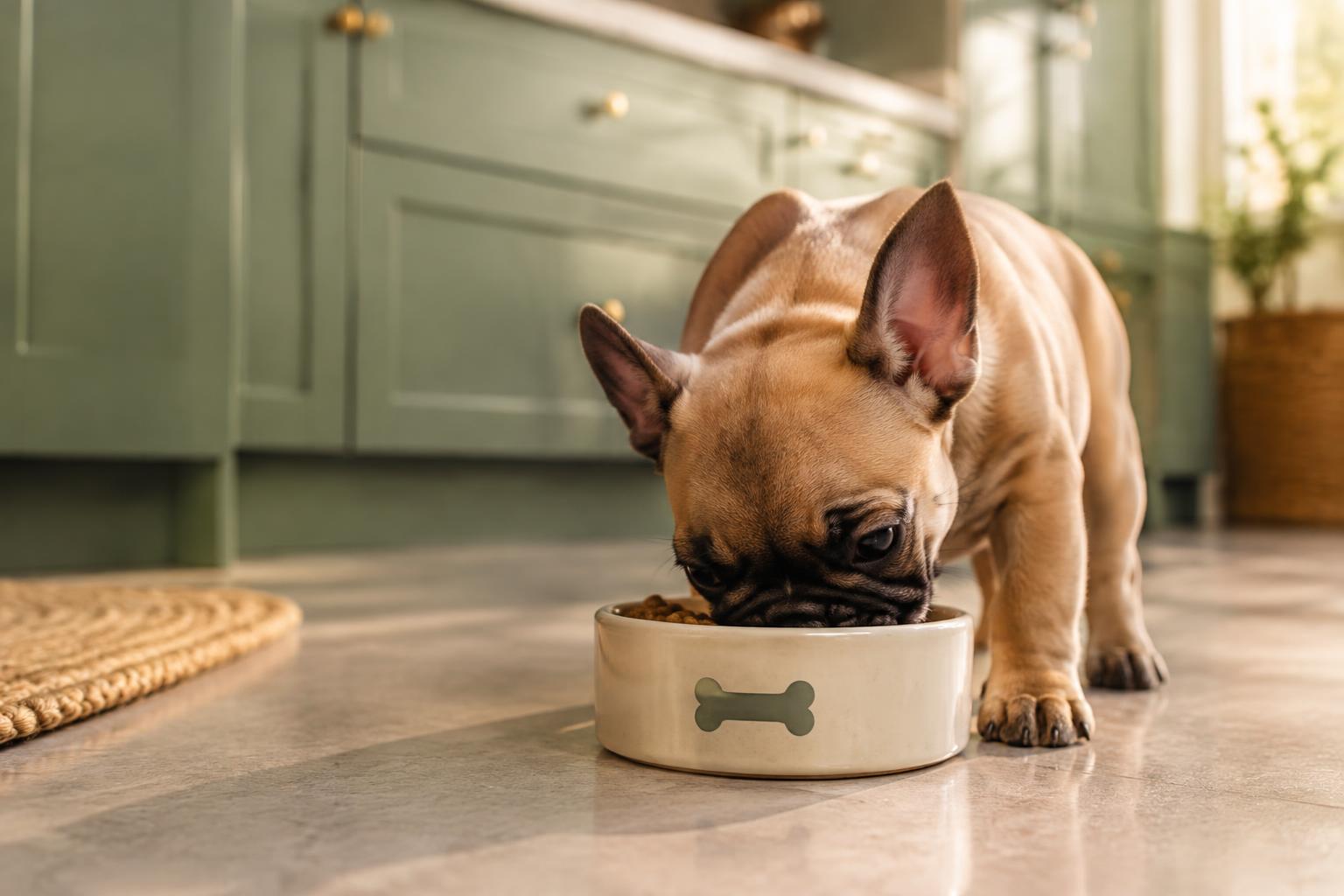
The best food is an individual decision
Choose an appropriate complete life-stage diet with your veterinarian. Start with the puppy’s current food and change gradually when advised. A brand list or breed label cannot determine what suits a dog with medical or digestive concerns.
Feeding charts and portion sizes
Use the food label as a starting point, then adjust with your vet for age, body condition, activity and health. Count treats as part of intake. A single grams-per-day chart cannot safely cover every puppy, adult and food formulation.
Food for allergies
Food allergy requires a structured veterinary approach, often involving a controlled diet trial. Repeatedly switching foods can make assessment harder. Avoid unbalanced homemade diets and supplements promoted as cures.
Obesity and weight loss
A lean body condition helps comfort and mobility. Discuss gradual weight management and safe activity with your vet, particularly for a dog with breathing or joint problems. Do not sharply restrict a growing puppy to match a target chart.
Practical daily care
Keep fresh water available, supervise chewing and use suitable bowls in a cool, comfortable place. Note appetite changes, recurrent gas or digestive symptoms. Seek advice promptly if a puppy will not eat or seems unwell.